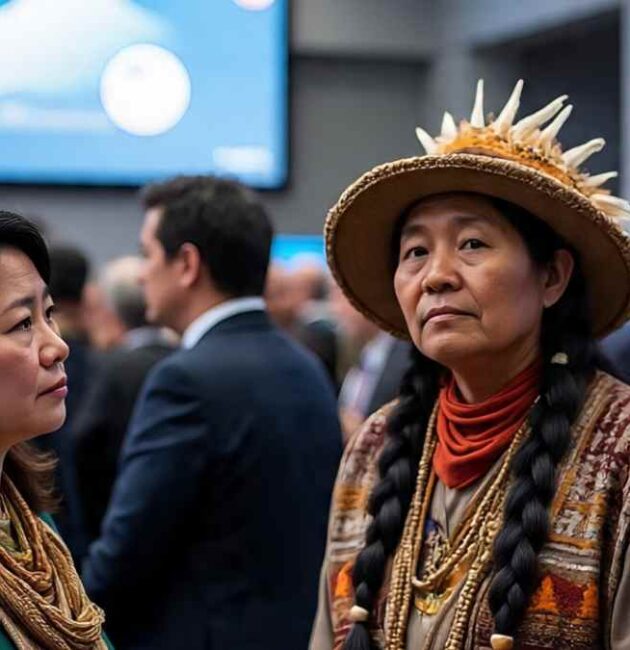
In a year marked by geopolitical tensions, economic instability and growing climate impacts, the COP30 climate summit in Belém, Brazil, ended with a strong signal: global cooperation is still possible, and the world is moving—however unevenly—towards real climate transition.
Ten years after the Paris Agreement, COP30 emerged as what negotiators described as the “COP of Truth,” a summit where implementation, rather than diplomacy alone, finally took center stage.
A New Phase of Multilateralism
Global Unity Amid Headwinds
- 194 countries came together despite major geopolitical fractures.
- 118 nations submitted updated national climate plans during the year.
- The summit demonstrated that while the world is increasingly multipolar, climate cooperation still moves forward “even when the headwinds are strong.”
A New Pragmatic Diplomacy
Experts saw COP30 as the moment when climate negotiations reconnected with reality:
- Arunabha Ghosh said that at COP30, “the real world finally came back into the room,” adding that climate talks must now be judged “not on plans, but on delivery.”
- Aarti Khosla noted that the summit highlighted the world “no longer shaped by unipolar politics” and strengthened a “new multilateralism” rooted in practical national action.
- Mary Robinson called the outcome “far from what science requires,” yet still significant at a time when multilateralism is being tested.
Key Outcomes of COP30
Global Implementation Accelerator
Countries launched a two-year Global Implementation Accelerator to close the gap between national ambition and what is needed to keep warming to 1.5°C. It includes a high-level dialogue next year and aligns with earlier agreements to transition away from fossil fuels.
A Just Transition Mechanism
Nations agreed to establish a new mechanism to support:
- Technical assistance
- Knowledge sharing
- Capacity building
- International cooperation
It aims to ensure that the shift away from fossil fuels is “just, orderly and equitable.”
Brazil’s Twin Roadmaps
COP30 President André Corrêa do Lago announced two major roadmaps:
- A roadmap to halt and reverse deforestation
- A roadmap to transition away from fossil fuels
He pledged to make both “inclusive and led by science,” saying, “We need roadmaps so that humanity can overcome dependence on fossil fuels and halt deforestation in a just and planned manner.”
Finance: Progress, but Still Falling Short
Commitments Made
- Developed countries agreed to triple adaptation finance by 2035, allocating around $120 billion of a $300 billion climate goal to adaptation.
- A two-year program on finance delivery was initiated.
- $135 million pledged to the Adaptation Fund.
- The Baku-to-Belém Roadmap lays out plans to scale global climate finance to $1.3 trillion a year by 2035.
- $300 million pledged for the Belém Health Action Plan.
Experts’ Opinion
- David Ryfisch warned the finance still “falls significantly short” as climate impacts accelerate.
- NRDC’s Joe Thwaites said the plan “helps ensure adaptation funding will continue to grow, but developed countries must act immediately.”
- Avinash Persaud praised stronger resilience funding but warned that rapid-release grant support is still lacking.
Forests and Indigenous Rights Take Center Stage
Major Forest Commitments
Over 90 countries backed a global deforestation roadmap addressing:
- Indigenous rights
- Monitoring
- Forest finance
- $6.5 billion was committed to the Tropical Forests Forever Facility.
Concrete Progress on Land Rights
- 10 new Indigenous Lands formally recognized in Brazil during COP30.
- $1.8 billion committed for direct and indirect funding to Indigenous and local communities.
- A new international land rights agreement will protect 160 million hectares—an area the size of Mongolia.
Marcelo Behar said COP30 “catapulted forests and Indigenous rights from the margins to the epicentre of talks,” adding that countries have long demanded recognition for protecting ecosystems critical to global climate stability.
Energy Transition Momentum
Key Announcements
South Korea committed to an early coal phase-out, joining the Powering Past Coal Alliance. Over 80 countries supported creating a fossil-fuel transition roadmap.
Governments and partners reported:
- $1 trillion in clean power investments planned by 2030
- $140 billion in clean industrial projects under development
- $590 million mobilized for methane reduction
Industry, Cities and Society Moving Faster
COP30 High-Level Champion Dan Ioschpe said Belém showed climate action “shifting into a new gear,” powered by businesses, cities and Indigenous leadership—even beyond formal negotiations.
Information Integrity: The “COP of Truth”
- New Protections Against Climate Disinformation
- 18 governments signed the Declaration on Information Integrity on Climate Change.
- The Global Initiative for Information Integrity expanded to 14 governments.
- The updated EU climate plan became the first ever to explicitly include measures addressing climate disinformation.
Trade Becomes a Climate Issue
New Trade Architecture
- Brazil launched the Integrated Forum on Climate Change and Trade.
- Brazil, China, EU, UK and others—responsible for 20% of global emissions—backed a new coalition for global carbon market alignment.
Expert Perspective
Jodie Keane said COP30 helped “mainstream trade within climate governance,” navigating tensions while opening the door to more coordinated global rules.
Food Systems: The Missing Piece
Despite widespread discussion across side events, agriculture failed to appear meaningfully in the final text.
Raj Patel said industrial agriculture had shown its “extraordinary power,” warning that “negotiations will continue to betray the communities they claim to serve” unless governments confront corporate influence.
Elisabetta Recine noted that real solutions were visible everywhere—from local agroecological meals to policy proposals—but “none of this made it into the negotiating room.”
Political Fractures in the Final Hours
The closing plenary was tense, with countries openly challenging process and language.
Key Flashpoints
- Colombia warned procedural rules were being ignored, arguing the COP “cannot support an outcome that ignores science.”
- Uruguay also objected to procedural handling.
- The LMDC group—including India—criticized some countries for trying to “delay the plenary” and praised the presidency’s balanced leadership, arguing that reopening gavelled decisions would set “a dangerous precedent.”
- A Hard-Won, Imperfect but Meaningful COP
- COP30 did not deliver everything:
- No joint decision to phase out fossil fuels
- No unified commitment on ending deforestation
- Agriculture largely absent from the final agreement
- But the summit did strengthen:
- The financial foundations of adaptation
- A global shift toward real implementation
- The rights and role of Indigenous peoples
- New spaces for trade, information integrity and decarbonization planning
- The political foundation for major changes in the coming two years
As Mary Robinson said, “If Belém revealed the limits of the possible, it also revealed the rising power of the determined.” COP31—and future summits—will now have to prove that determination can translate into action on the ground.