
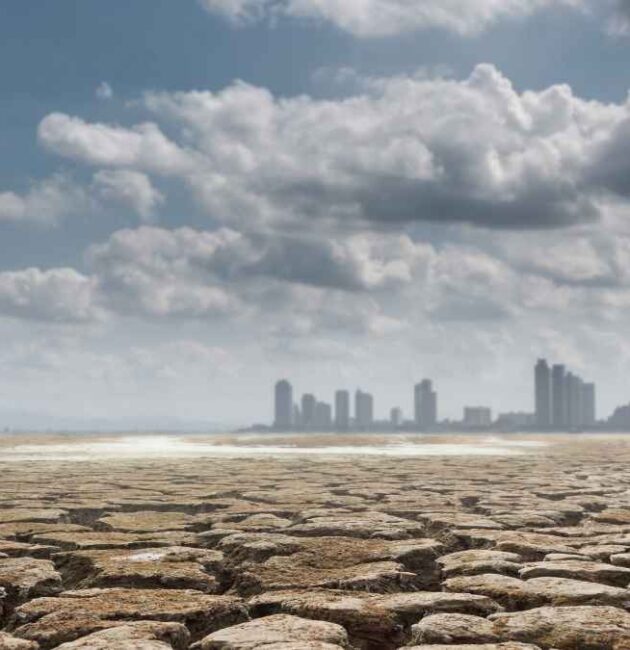
India has emerged as the ninth most affected country by extreme weather events over the past 30 years, according to the newly released Climate Risk Index 2026 by Germanwatch. The ranking places our nation among the eleven countries most severely impacted by heat waves, storms, and floods—a list that collectively houses over three billion people, representing approximately 40 percent of the global population.
The sobering findings were presented at COP30 in Belém on November 12, 2025, revealing that between 1995 and 2024, the world witnessed over 9,700 extreme weather events that claimed more than 830,000 lives and caused over USD 4.5 trillion in direct economic damage. For India, a country that faces floods, heat waves, and storms with alarming regularity, these numbers underscore a harsh reality that millions of our citizens confront each year.
India’s Recurring Climate Disasters
What makes India’s position in the index particularly concerning is the frequency and diversity of extreme weather events striking the nation. “Countries such as Haiti, the Philippines, and India—all of which are among the ten most affected countries in the CRI—face particular challenges,” explains Vera Künzel, co-author of the index. “They are hit by floods, heat waves, or storms so regularly that entire regions can hardly recover from the impacts until the next event hits.”
This pattern of repeated disasters creates a vicious cycle where communities barely have time to rebuild before the next catastrophe strikes. From the devastating floods in Kerala and Assam to the lethal heat waves that sweep across northern states, India’s vulnerability to climate-induced extreme weather is both geographically widespread and temporally relentless.
Heat Waves and Storms: The Deadliest Threats
According to the Climate Risk Index findings, heat waves and storms pose the greatest threat to human life among all extreme weather events. For India, where summer temperatures regularly cross 45°C in several states, this finding resonates deeply with lived experiences. Storms have caused the greatest monetary damage globally, while floods have affected the largest number of people—all three categories in which India has suffered significantly.
Laura Schäfer, one of the CRI’s authors, emphasizes the human cost: “Heat waves and storms pose the greatest threat to human life when it comes to extreme weather events.” In a nation of 1.4 billion people, where large populations depend on outdoor labor and many lack access to cooling infrastructure, the death toll from these events continues to mount.
Global South Bears the Brunt
The Climate Risk Index 2026 reveals a stark pattern of climate injustice. None of the eleven most affected countries are among the rich industrialized nations. The list includes Libya (ranked 4th), Haiti (5th), the Philippines (7th), India (9th), and China (11th). At the top sits Dominica, a small Caribbean island nation devastated by Hurricane Maria in 2017, which caused damage amounting to nearly three times the country’s GDP.
However, wealthy nations are not immune. France (12th), Italy (16th), and the USA (18th) also appear among the 30 countries most affected by extreme weather. “The results of the CRI 2026 clearly demonstrate that COP30 must find effective ways to close the global ambition gap,” states David Eckstein, co-author of the index. “Global emissions have to be reduced immediately; otherwise, there is a risk of a rising number of deaths and economic disaster worldwide.”
The Challenge of Recovery and Adaptation
For India, the implications of this ranking extend beyond statistics. The index highlights that countries facing regular extreme weather events struggle with a fundamental challenge: the impossibility of adequate recovery between disasters. When floods devastate farms in one season, heat waves scorch crops in another, and storms destroy infrastructure repeatedly, the economic and social fabric of affected regions begins to fray.
“When more funding to address loss and damage is negotiated here at COP, the focus is on countries like these,” Künzel points out. “Without more long-term support—including for adapting to the climate crisis—they will face insurmountable challenges.” This statement holds particular relevance for India, where adaptation efforts must scale rapidly to match the growing intensity and frequency of extreme weather.
Intensifying Climate Crisis
The index reveals a disturbing trend backed by scientific evidence: in a warmer world, tropical cyclones are becoming more intense and more destructive. Myanmar, which ranks second in the index, experienced Cyclone Nargis in 2008, which killed nearly 140,000 people and caused USD 5.8 billion in damage. Such extreme events demonstrate that the threat is not theoretical but immediate and deadly.
Lina Adil, co-author of the index, notes that economic damage in relation to GDP clearly underscores “the scientifically confirmed trend that in a warmer world, tropical cyclones are becoming more intense and more destructive.” For India’s coastal states and island territories, this trend signals an urgent need for enhanced disaster preparedness and climate-resilient infrastructure.
The Path Forward
The Climate Risk Index 2026 serves as both a warning and a call to action. It demonstrates that India, despite being a developing nation with limited historical responsibility for greenhouse gas emissions, bears a disproportionate burden of climate impacts. The index also assessed individual years, with the Caribbean nations of St. Vincent and the Grenadines, and Grenada ranking first and second for 2024 after being devastated by a Category 5 hurricane, while Chad ranked third due to months-long floods.
The authors emphasize that effective solutions for loss and damage must be implemented, adaptation efforts must be accelerated, and adequate climate finance must be provided. For India, this means not just receiving international support but also strengthening domestic climate resilience measures, early warning systems, and disaster response capabilities.
What is Climate Risk Index?
The Climate Risk Index, published annually by Germanwatch since 2006, is a comprehensive analytical tool that measures the extent to which countries have been affected by extreme weather events. The index analyzes the number of deaths, people affected, and economic damage caused by extreme weather events—both in absolute terms and in relation to population size and gross domestic product.
Over the past two years, Germanwatch has revised the index’s methodology. The current index is compiled based on data from the International Disaster Database (EM-DAT) on extreme weather events and socioeconomic data from the International Monetary Fund (IMF) and the World Bank. Due to these methodological adjustments, comparisons between current and previous indices are not possible.
It’s important to note that although the index uses the most comprehensive publicly available data, the actual impact on countries in the Global South is likely greater than shown. Many industrialized nations have much more comprehensive documentation of extreme weather events’ consequences than poorer countries, suggesting that countries like India may be even more severely affected than the rankings indicate.